"Did you ever finish that book?"
I was at my parents' place for the holidays when my mom asked, "That book I gave you for your birthday last year. Did you ever finish it?" "Uh, about halfway?" Halfway was generous. The bookmark was sitting around page 40. She just laughed and said, "That's what I figured."
When I got home I counted the stack next to my bookshelf. Eleven books bought since last year. Finished: zero. Every one had a bookmark somewhere in the first few dozen pages. 'Maybe I just like buying books, not reading them.' That thought stung a little.
But I did want to read them. I was genuinely excited every time I picked one out. The real problem was that reading didn't have a place anywhere in my day.
Why reading in bed never worked
My plan had always been to read before bed. Lie down, turn on the lamp, one chapter a night. Sounds lovely. In practice it went one of two ways: I'd fall asleep three pages in, or I'd pick up my phone to 'just check one message' and lose an hour.
I mentioned this to the coworker who sits next to me. "By bedtime you've already spent all your focus for the day," she said. "I read in the morning." "In the morning? I barely have time to get ready." "That's why it's only 25 minutes. Even if I want to keep going, I close the book."
My first thought was, 'Twenty-five minutes in the morning means 25 minutes less sleep.' Then I realized I was already spending half an hour every morning scrolling news and forums before leaving. I didn't need to sleep less. I just needed to swap out what that time was for.
Just three rules
I knew I'd quit again if I made it complicated, so I kept it to three rules. One: right after I'm washed up, one 25-minute timer. Two: my phone stays plugged in on the living room charger and doesn't come to the table. Three: only one book goes on the kitchen table.
That third rule mattered more than I expected. With all eleven books in front of me, I'd spend five minutes every morning deciding what to read. With just one out, there was nothing to decide. I wouldn't bring out another one until I'd finished that book or decided to let it go.
I put the timer on a tablet instead of my laptop and played rain very quietly in the background. Mornings in my building mean an upstairs vacuum and motorbikes outside, and the rain smoothed that over. That's just what worked for me, though. Research on whether background noise helps reading comprehension is genuinely mixed, and plenty of people read better in silence.
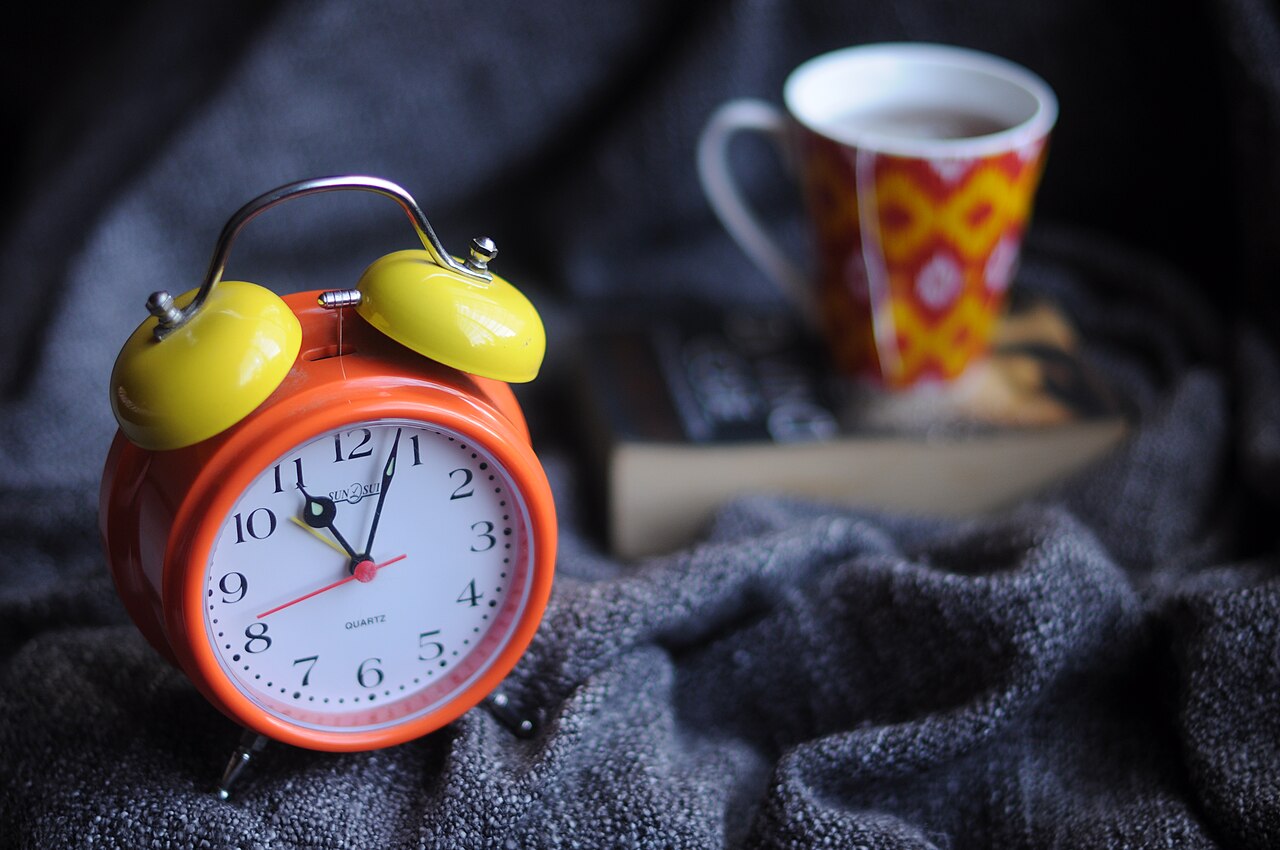
How much can you read in 25 minutes?
The first week I actually counted pages. Fiction ran about 30 pages per session. Denser nonfiction, like economics or science books, was closer to 15. At one session a day, that's about ten days for a 300-page novel and around three weeks for a thick nonfiction book. Seeing the numbers made me think, 'Okay, this could actually work.'
From week two on, before closing the book I'd write one line on a sticky note: a sentence I wanted to remember, or a thought of my own. The next morning I'd read the sticky note first and instantly remember where I'd left off. No more flipping back a few pages to find my place.
The hardest part was closing the book when the timer went off. When it rang in the middle of a good scene, I wanted to keep going. The few times I read ten extra minutes, I ended up running for the train. After that I just closed it. Oddly enough, stopping mid-scene made me look forward to the next morning.
Letting go of a book I wasn't finishing
In week four I got stuck. It was a thick history book I'd bought because everyone said it was great, but even with a full 25 minutes every morning, every page felt heavy. It took me a week to get through 60 pages.
I asked my coworker, "Do you think I should push through this one?" She laughed. "If it's boring, put it down. Books aren't homework." "I feel bad, though. I paid for it." "Isn't that exact feeling why you haven't read the other ten?"
She had a point. I put the book back on the shelf with the bookmark still in it and decided it was 'not right now,' not 'never.' The next book I picked up was a short essay collection, and I finished it in three days. That's when I realized letting a book go counts as progress too.
Six weeks later, another call with Mom
Over those six weeks I started the morning timer on about 26 weekdays. Late mornings and the mornings after work dinners mostly didn't happen. Still, I finished three books, and the novel my mom gave me was one of them.
I called her the day I finished it. "I finished that book. I did not see that ending coming." "Right? I cried at that part." That call ran a good twenty minutes longer than usual. I don't think we'd ever talked that long about a book before.
There's no evidence that 25 minutes in the morning is the ideal way to read. What worked for me wasn't really the time. It was the setup: a time of day when I still had focus left, a spot away from my phone, and one book with nothing to choose. For someone else, that might be a lunch break or the train ride home.
If you have a stack of unread books
What changed over six weeks wasn't my willpower. It was where reading sat in my day. If there's a pile of books next to your shelf, here's how I'd start.
- Move reading to a time when you still have focus left. For me, that was before work.
- Make the goal "one timer," not a page count. One round counts as a win.
- Leave your phone in another room. If it's within reach, 25 minutes won't happen.
- Keep only one book out. Choosing takes longer than you'd think.
- Write one line on a sticky note when you stop. The next session starts faster.
- Let go of books you're not enjoying. Forcing one costs you all the others.